
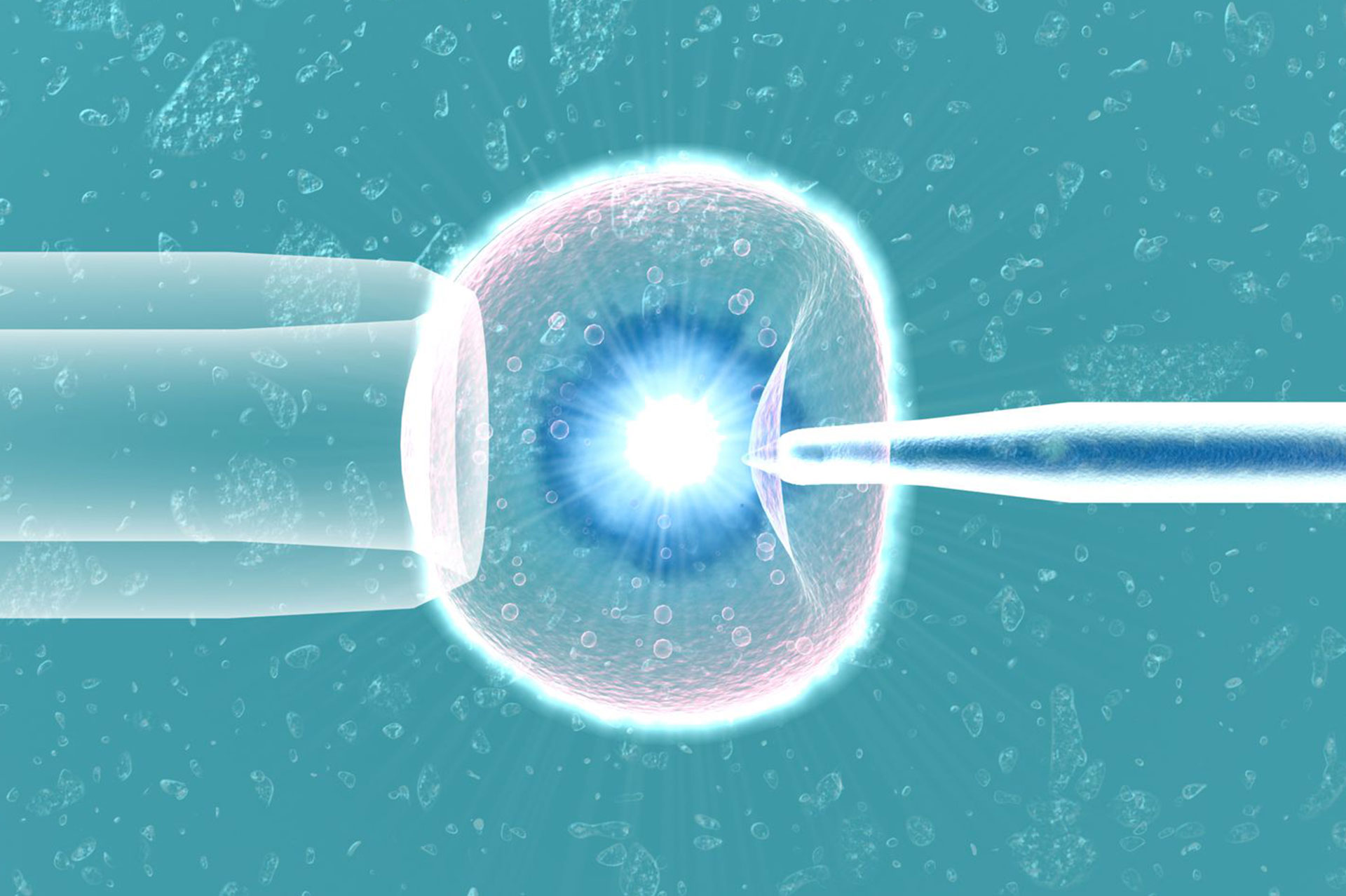
What is Laser-Assisted Hatching?
In natural conception, the embryo has to shed its protective outer layer, called the zona pellucida, before it can attach to the uterine lining. This step is known as “hatching.” Sometimes, the shell is too thick or too hard, which can make the process more difficult. Laser-assisted hatching is a lab technique used in IVF where embryologists make a very tiny opening in this shell using a focused laser beam. This small hole helps the embryo come out more easily and increases the chance of successful implantation. The process is quick, precise, and does not harm the embryo. Take the next step in your parenthood journey – Book your consultation now.Why is Hatching Important in IVF?
The success of IVF depends not just on fertilization, but also on whether the embryo can implant in the uterus. If hatching is delayed or incomplete, implantation may fail. Studies show that up to 25–30% of IVF embryos fail to implant because of hatching problems (Source: Human Reproduction Update, Oxford Academic, 2022). This is one reason doctors sometimes recommend laser-assisted hatching—especially for patients with repeated IVF failures.How is the Procedure Done?
- The procedure is usually performed on day 3 of embryo development, when the embryo has started dividing into multiple cells.
- The embryologist places the embryo under a microscope.
- A laser beam is directed at one small spot on the outer shell to create a precise opening.
- The embryo is then placed back in the uterus, where it can continue its natural development and hopefully implant.
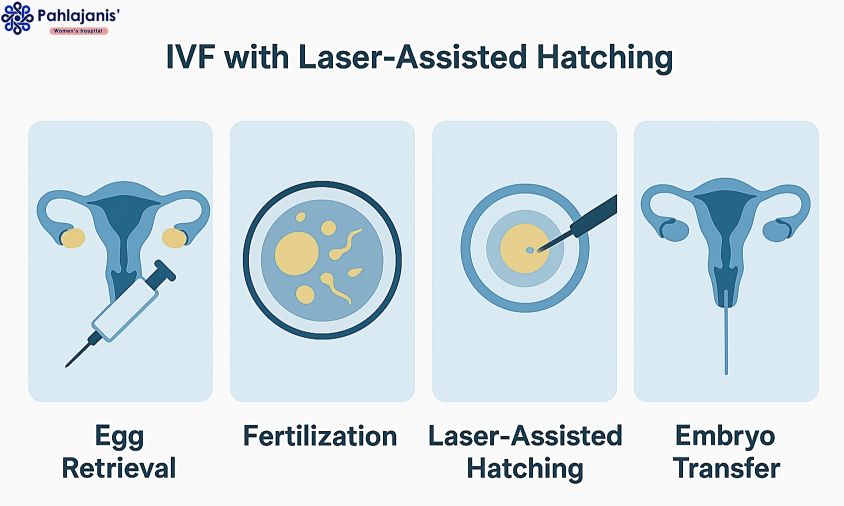 The entire step takes only a few seconds. Because the laser is highly targeted, the embryo itself is not exposed to heat or damage.
Who May Benefit from Laser Hatching?
Not every IVF patient needs laser-assisted hatching. Doctors usually recommend it for:- Women over 35 – older eggs often have a harder shell.
- Couples with multiple failed IVF cycles – when embryos look healthy but still fail to implant.
- Patients with frozen-thawed embryos – freezing can sometimes make the shell harder.
- Cases with poor embryo quality – where natural hatching may be slower or incomplete.
Does It Really Make Implantation Faster?
This is where data matters. Research suggests that laser-assisted hatching does not speed up implantation in every single case, but it can make implantation more efficient for specific groups of patients.- A study published in the Journal of Assisted Reproduction and Genetics (2021) found that pregnancy rates improved by 15–20% in women over 37 when laser hatching was used.
- Another review from the Cochrane Library (2020) reported that laser hatching increased implantation rates by around 10% in patients with repeated IVF failures.
Success Rates in India and Raipur
India has seen a steady rise in advanced fertility techniques, including laser-assisted hatching. According to the Indian Society for Assisted Reproduction (ISAR, 2023), IVF success rates in India range from 35% to 45% per cycle. With laser hatching, select patients see up to a 10–15% improvement in outcomes. In cities like Raipur, fertility centers have started using laser hatching routinely for complex cases. Couples looking for treatment in Raipur often search for:- Laser hatching treatment in Raipur
- Best laser hatching fertility clinic Raipur
- Cost of laser hatching treatment in Raipur
Cost of Laser Hatching Treatment in Raipur
The cost of laser-assisted hatching in Raipur generally ranges between ₹15,000 – ₹25,000, depending on the clinic, the technology used, and whether it is part of a complete IVF package. When compared to the overall IVF cost in India (₹1.2 – ₹2 lakh per cycle), laser hatching is considered an add-on treatment. While it increases the total expense, many couples choose it because the potential improvement in success rates outweighs the additional cost.Advantages of Laser-Assisted Hatching
- Minimal handling – The embryo is touched very little during the process.
- Precision – The laser makes an exact opening without risk of cutting too deep.
- Time-saving – The procedure takes only seconds.
- Improved success – Especially in older women, frozen embryos, and repeated IVF failures.
- Safe – Research shows no increase in birth defects or complications linked to the technique (American Society for Reproductive Medicine, 2022).
Risks and Limitations
No medical technique is without limits. Some things to keep in mind:- Not necessary for every IVF case.
- May not improve outcomes if embryos are already of high quality.
- Adds cost to the overall IVF treatment.
- Rarely, if the opening is too large, it may increase the chance of embryo splitting (leading to identical twins).